Northern Europeans get more skin cancer than people in the South
In a nutshell
Skin cancer rates are highest in Holland, Norway, and Denmark and lowest in Turkey, Albania, and Moldova
Conventional wisdom - “excessive UV exposure,” – not supported by studies
Regular, safe sunlight exposure delivers net health benefits - outweigh skin cancer risk
This is another short article intended to add to a wider discussion of how sunlight provides a foundational benefit to human health and longevity. It is prompted by the observation that skin cancer rates are higher in northern Europe than southern Europe. I want to address what the article attributes as cause and to offer an alternative. I’ll cover the following:
Skin cancer rates addressed in the article
What the article offers as the cause
A counter-intuitive alternative – with supporting evidence
Skin cancer rates addressed in the article
Figure 1 shows that more northerly countries have generally more skin cancer than southern countries. The highest rates are to be found in Holland, Norway and Denmark, while the lowest are in Turkey, Albania and Moldova.
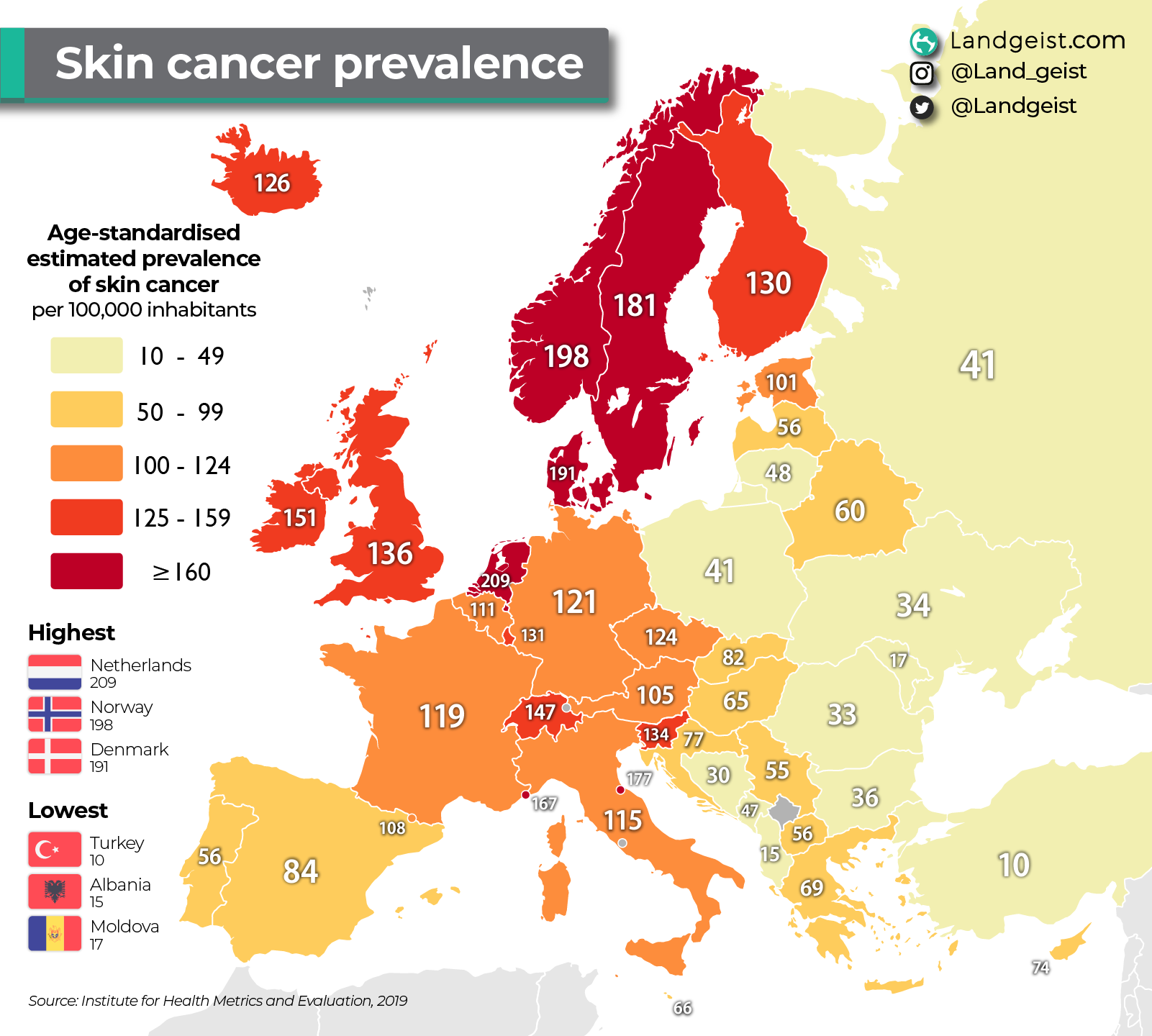
Figure 1: Skin cancer rates in Europe (from Landgeist at the link above)
What the article offers as the cause
The article explains the data according to the standard narrative, namely:
Skin cancer is primarily caused by “excessive exposure to the sun’s harmful UV rays”
Southern Europe is closer to the equator and should, therefore, be expected to have higher rates of skin cancer than northern Europe
Northern Europeans go south to get a tan and get burned because they don’t use clothing and sunblock to protect themselves from the harmful effects of UV
A counter-intuitive alternative – with supporting evidence
The counter-intuitive alternative
I suspect that there are a few things going on:
Northern Europeans don’t get regular strong sunlight and are not taking precautions to prevent burning when they do take holidays in the sun – this agrees with the article’s authors
Southern Europeans are exposed to stronger sunlight year-round. Culturally, they manage exposure more safely - siestas, shade, clothing, and gradual acclimation. This affords them the full benefits of natural light
Better metabolic health (including less skin cancer) results from regular, safe sun exposure in the south. Conversely, chronic low sunlight exposure in the north is linked to reduced vitamin D, circadian disruption, mitochondrial dysfunction, and chronic inflammation. These factors increase vulnerability to many diseases, including cancer
Supporting evidence
Safe sun exposure results from allowing our body to “read” the sun’s signals and using them to get ready for strong summer sunlight (known as building a solar callus).
We still don’t completely understand how sunlight works to our advantage. However, specific insights into its benefits are increasing.
A powerful Swedish study followed ~30,000 women for 25–30 years (described here), Women who actively sought sun exposure had:
Lower all-cause mortality
Roughly half the mortality rate
Major reductions in heart disease and non-cancer deaths
More skin cancer diagnoses - but still lived longer
Other, smaller studies support the observations that sunlight provides a net benefit to human health:
For every one death linked to UV exposure, roughly 100 deaths are prevented by it
Full spectrum light is good for our skin and gut microbiomes
Summary
Full spectrum sunlight is like real food
Avoiding sunlight entirely is like living on ultra-processed food instead of a nutrient-dense diet. Yes, burning carries risk - particularly for fair-skinned people with infrequent exposure. But regular, sensible sun exposure provides a wide array of protective benefits that far outweigh the downsides for most people.
Build a solar callus gradually. Get outside daily. Respect skin’s signals. The data suggests that overall health and longevity will improve.
Additional sunlight articles
2026 - Spring Equinox – sunlight’s seasonal signal and the 100x benefit of UV exposure
2025 - All life on earth absorbs sunlight for energy…including humans
2025 - April/May Seasonal Update: The Rapid Increase in Sunlight
2025 - March Seasonal Update: The Return of Full Sunlight and a Waking Garden
2024 - Light is good for the microbes on our skin and in our gut
2024 - The importance of sunlight