New American dietary guidelines - a game-changing improvement
In a nutshell
New guidance represents a welcome emphasis on real, nutrient-dense food
Good health begins on our plate – not at the doctor - prevention is better than cure
Recognition that raised insulin caused by previous guidance has resulted in unprecedented levels of chronic disease
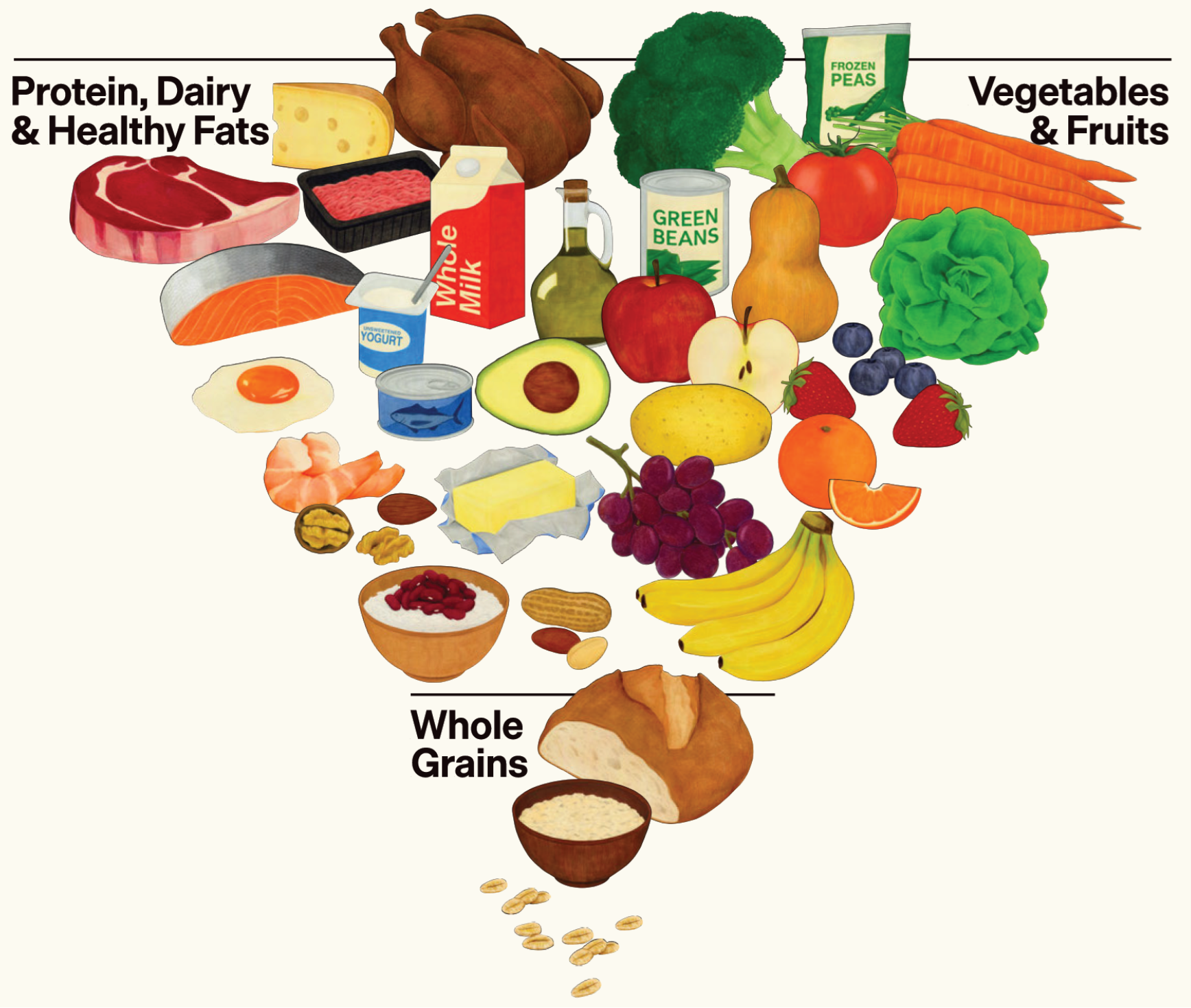
On 7 January, 2026 the United States Government issued revised Dietary Guidelines for Americans (DGA). In my opinion, these guidelines represent a significant change for the better. They recognize that prevention is better than cure and that good health begins on our plate - not at the doctor’s office. Preventing chronic illness begins with eating real, nutrient dense food.
In this article, I’ll cover the following:
A description of the new guidelines
Guidance for special populations
The situation regarding fat in the human diet
The new guidelines
The core guideline document is a succinct, easy read at 10 pages long compared to the old at 150 pages. It is supported by a 90-page scientific report including 328 pages of appended data for a deep dive. There is also a three-page food servings guide. All of these documents can be found here.
I think of the new guidelines in two ways. Firstly, they stop the self-harm baked into prior versions and they recommend food that is aligned with what our species evolved to eat – food that helps prevent rather than promotes illness.
Stopping the self-harm
This is straightforward and aligns with what I’ve written previously. The new guidelines recommend avoiding highly processed foods with artificial additives including refined carbohydrates (sugar and starches), and seed oils.
Those industrially processed ingredients create an evolutionary mismatch for the human race. Consuming them routinely over time has resulted in a dramatic increase in what are described as chronic diseases (see Chapter 1 of The Scientific Foundation for the Dietary Guidelines for Americans) - heart disease, type 2 diabetes, obesity, high blood pressure, fatty liver, PCOS…and the list goes on.
Gary Taubes has an interesting take on why previous guidelines have caused people to self-harm. In essence, they were based on the lowering blood cholesterol, central to the unproven diet heart hypothesis:
“In previous versions of the DGAs, all guidance had to be reconciled with a fundamental goal of keeping LDL cholesterol low. A healthy diet was, as much as any single factor, an LDL-lowering diet. That meant minimal meat and dairy products, both significant sources of saturated fat; … was an acceptable evil so long as what’s processed are carbohydrates and plant-based foods.”
Eating food that humans evolved to eat
The new guidelines return us to the basics – to the things that, as a species, humans are adapted to eat. They can be personalized to individual needs and preferences - an n=1 approach using real food will combat diet-related chronic diseases. Specifically:
Prioritize whole, nutrient-dense foods - high-quality protein (red meat, poultry, eggs, seafood, dairy), healthy fats, fruits, vegetables, and limited whole grains
Protein - increase recommended daily allowance 50% to 100%, encouraging animal- and plant-based sources at every meal
Fats - emphasize healthy fats from whole-food sources (e.g., meat, full-fat dairy, avocados, nuts, seeds, olives, seafood) - preferred cooking with olive oil, butter, or beef tallow.
Reduce highly processed foods - refined carbohydrates, seed oils, and those with artificial flavors, dyes, preservatives, or low-calorie sweeteners
No added sugars - none for children under a certain age; naturally occurring sugars are acceptable
Alcohol - consume less for better health (no specific recommendation)
Feed the gut microbiome - fruit and vegetables may support a healthy gut microbiome
Underpinning these is an acknowledgment that many chronic diseases stem from elevated insulin driven by excess sugar and starch. Gary Taubes again:
“With the new DGAs, the overriding message is to consume unprocessed whole foods, animal or not. These are the foods that require minimal insulin to control blood sugar. The acknowledgement toward the end of the 10-page document that “individuals with certain chronic diseases may experience improved health outcomes when following a lower carbohydrate diet,“ is itself an acknowledgement that for many of us, the fewer the carbohydrates we consume, the healthier we will be.”
Guidance for special populations
I won’t get into the details, it’s a simple read you can do yourself. The groups considered to be at-risk are as follows:
Infancy & Early Childhood (Birth–4 Years)
Middle Childhood (5–10 Years)
Adolescence (11-18 Years)
Young Adulthood
Pregnant Women
Lactating Women
Older Adults
Individuals with chronic disease
Vegetarians and Vegans
For individuals with chronic disease, the guidelines contain language that is music to my ears:
“Individuals with certain chronic diseases may experience improved health outcomes when following a lower carbohydrate diet.”
The guidelines also recommend that vegetarians and vegans take great care to ensure adequate levels of macro- and micro-nutrition, including taking supplements.
The situation with fat – particularly seed oils
Get most from whole foods including meats, poultry, eggs, seafood, nuts, seeds, full-fat dairy, olives, and avocados
When cooking, use "the most nutrient-dense natural options…such as olive oil." Other options include butter or beef tallow
Unlike previous guidelines (2020–2025), which explicitly suggested replacing animal fats with seed oils (e.g., rapeseed/canola or soybean), the new ones omit them
The guidelines strongly advise against highly processed foods. Supporting materials note concerns about "processed oils" in relation to human health
The animal (saturated) fat limit remains unchanged at ≤10% of daily calories. Full-fat dairy and meat, rather than low-fat alternatives, are encouraged
Seed oils are not banned, but they are de-emphasised in favor of whole-food fat sources and specific alternatives. This is a huge improvement.
The animal fat limit of ≤10% of daily calories is strange. I can only imagine that will be exceeded when someone follows the protein recommendation by eating meats as discussed by Nina Teicholz. I also think it’s silly…we did, after all, evolve to eat animal fat. Oh well…!
Summary
These new guidelines represent a long-overdue return toward real, nutrient-dense food after a decades-long failed experiment with an unnatural diet of sugar, highly processed food ingredients, and toxic seed oils. The old food pyramid made people sicker, weigh more, and destroyed their metabolic flexibility.
I think of nutrition in terms of two principles. The first is foundational and can be applied by each of us - eat unprocessed, nutrient-dense meats, vegetables and fruit. The second is personal. Each of us should determine which foods work best – the n=1 experiment. How much meat- versus plant-based? How much fibre? How much fat?
There is a real challenge in all of this. Most dietary "evidence" comes from short-term, self-reported association studies that reveal nothing about long-term causality.
For me, real, nutrient-dense food has never been a problem. Ignoring our evolved human biology was. These guidelines are a big positive step towards correcting historic ignorance.