High Blood Sugar is a More Useful Name Than Type 2 Diabetes
In a nutshell
T2D is mistakenly always considered a lifelong, progressive disease - the name instils fear and says nothing about cause or solution
High blood sugar is a more actionable name - prevention and recovery are possible
The solution can be simple, implementation may need care and support
Of all the so-called “chronic diseases” that I believe are modern malnutrition, Type 2 Diabetes (T2D) shows the greatest evidence for recovery. Giving the condition a less scary and more descriptive name could make this more obvious.
Before proceeding, this article is about better framing T2D. It does not apply to Type 1 Diabetes, gestational diabetes, or other non-dietary-induced forms of elevated blood glucose.
In this article I’ll cover:
Why a name matters and why I like “High Blood Sugar”
Describing the escape
Evidence for recovery and how to achieve it
Why a name matters and why I like High Blood Sugar
Many of us fear T2D because we’ve been told it is progressive and lifelong. A diagnosis often comes with the expectation of pharmaceutical drugs for the rest of life [1].
The name is at best off-putting and at worst frightening. It gives no insight to cause, or that something relatively simple might help. If we consider cause, a better name emerges.
The cause of T2D
Causation is difficult to prove and still a topic of rigorous debate, but there is very strong evidence that over-nutrition with bioavailable carbohydrates triggers a cascade of high blood sugar (glucose), high insulin (hyperinsulinemia), organs that stop responding properly to insulin (insulin resistance). If unchecked, these result in symptoms that we refer to as T2D (Figure 1) [see also references 2 to 5].
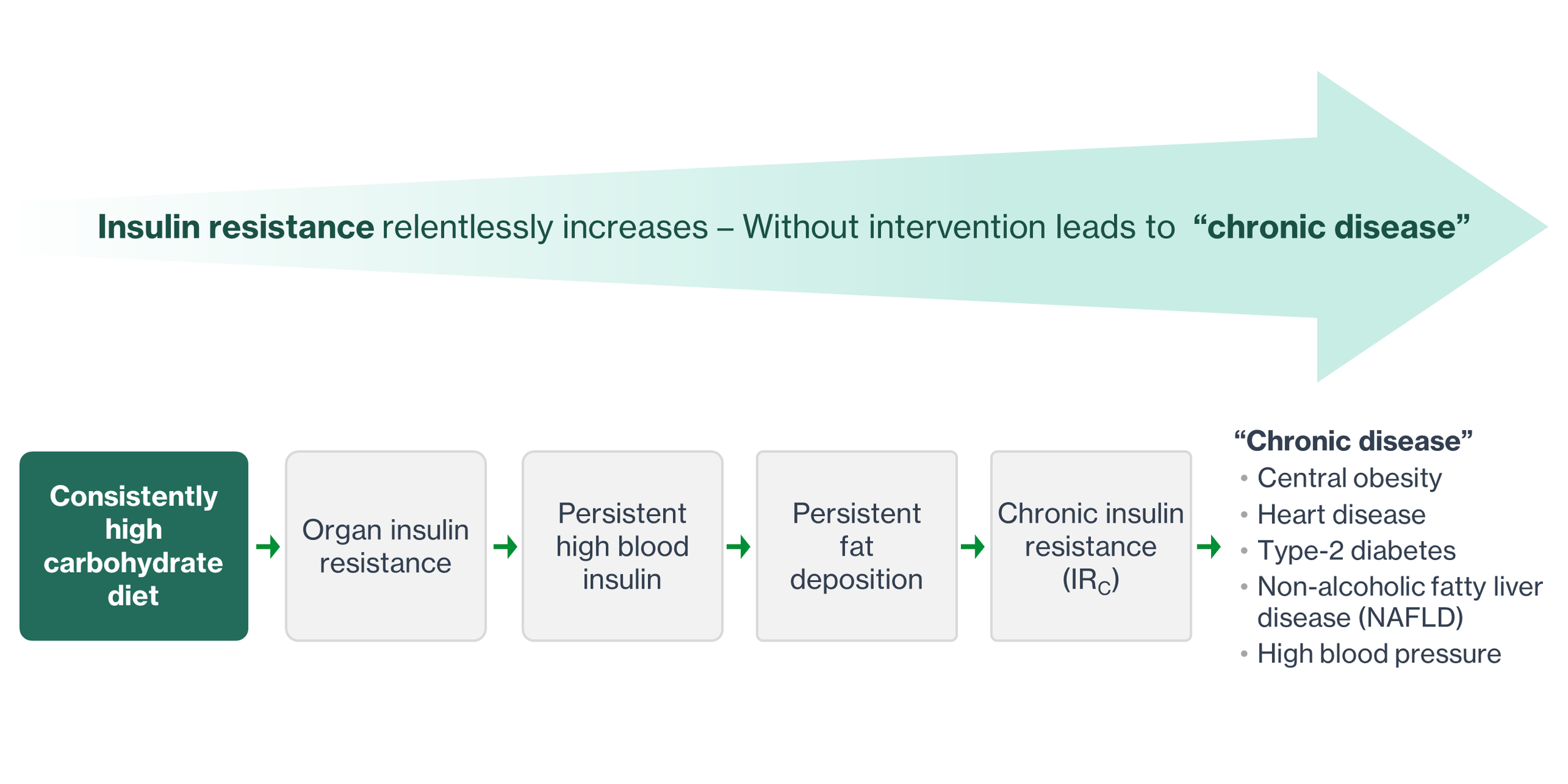
Figure 1: Hyperinsulinemia and insulin resistance from eating too much high carbohydrate food leads to T2D and other “chronic diseases”
Other names for T2D
Better names have been proposed, including “end-stage insulin resistance” and “carbohydrate toxicity syndrome”. Both communicate more of the biology. However, they are still too medically-oriented and do not convey the condition’s simpler reality.
The medical community confirms the simpler reality in how it defines remission - escape from T2D.
Describing the escape
Medical remission
T2D is characterized by elevated levels of blood glucose. When blood glucose stays high for long enough, glucose sticks to hemoglobin in red blood cells. That measure is called HbA1c (Figure 2). It is a marker of longer-term glucose exposure - the higher the exposure, the higher the HbA1c, and vice versa.
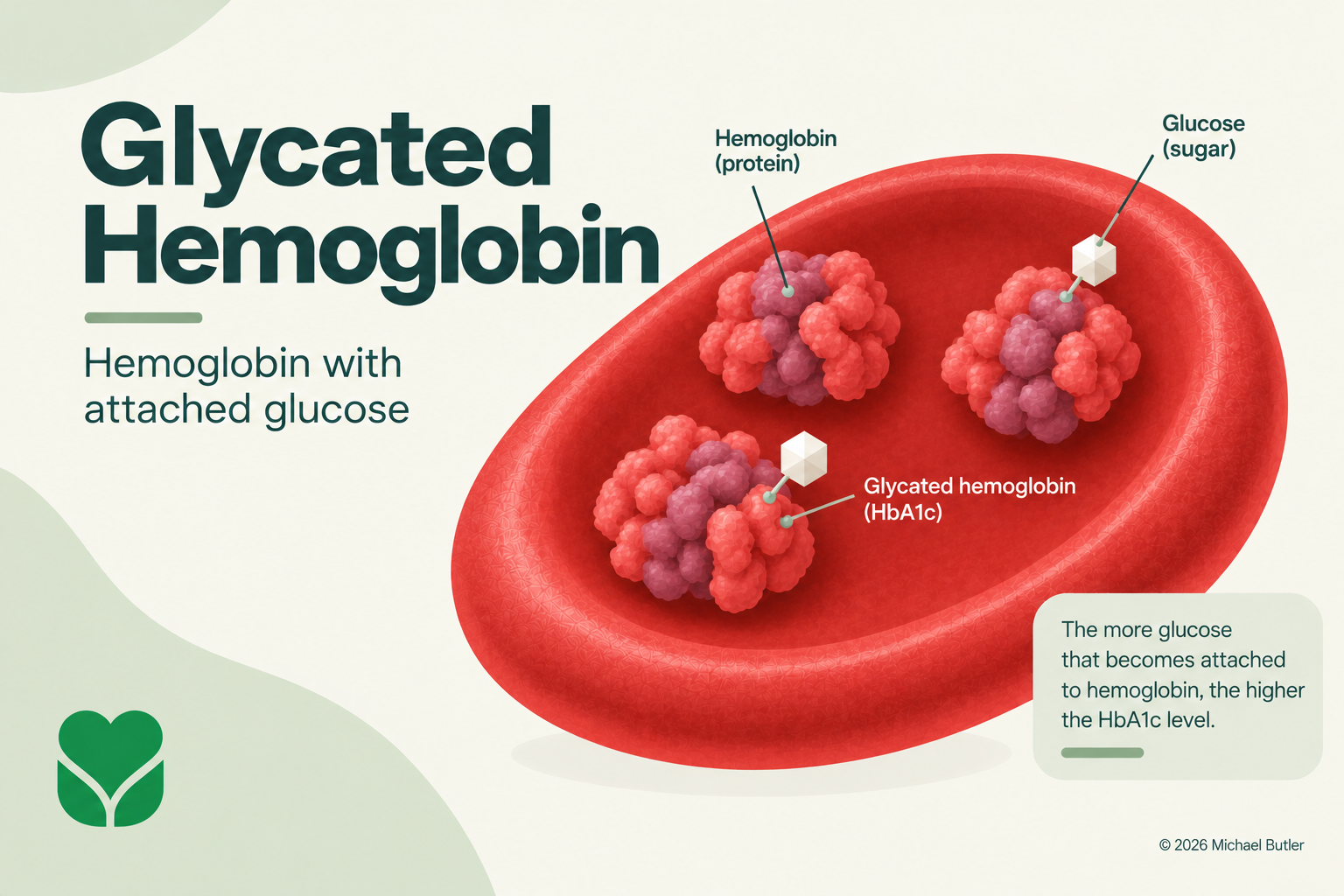
Figure 2: Glycated hemoglobin (HbA1c) reflects long-term blood glucose exposure
Once HbA1c falls below a defined threshold, and taking into consideration other important factors, doctors say the patient’s T2D is in remission.
The definition of T2D and its remission, position blood glucose centrally to its understanding and potential remedy.
Remission still frames the problem as a complicated medical condition. It also reminds me of cancer, which is not helpful, to put it mildly.
Other names
I’ve used reversal but I’m not completely sold on that either. I think that T2D is largely a self-inflicted harm from eating too much dietary carbohydrate for too long, so where does that lead us?
If I think about instances of self-inflicted harm in my life I come up with three examples, namely hangover from the night before, smoking-induced asthma attacks, and repeated hamstring pulls from playing football.
I didn’t put them into remission, nor did I medically reverse them. I recovered by stopping or moderating the cause and substituting something better.
I haven’t included my dietary-induced heart disease here. I’m still working on recovery and will report back when I have the evidence one way or another.
Evidence for recovery and how to achieve it
It is now quite clear that T2D can be avoided and, in many cases, recovered from with a low carbohydrate diet. See below “Previous articles of interest” and references 2 to 5.
Making the change is not always easy. I like this approach:
Cut back on sugar and starchy carbohydrates
Increase greens and protein
Don’t fear healthy fats
Track changes over time
Embrace support from family, friends, and enlightened healthcare providers
Start as early as possible after diagnosis [3]
The supplementary file to reference 3 contains very useful background information, including a low carbohydrate diet sheet.
There are many low-carbohydrate options. A recent study compared a very-low-carbohydrate ketogenic diet, a Mediterranean diet, and a very-low-fat plant-forward diet [6]. The very-low-carbohydrate diet produced greater metabolic benefits than the others. Perhaps worth considering.
Summary
I think knowing how to avoid high blood sugar is conceptually simple, but challenging in practice. Recovery from T2D is more complicated and should be done with the support of whoever oversees an individual’s care.
If most of us follow a diet consistently high in processed carbohydrates, we suffer. We are in essence eating things at a frequency for which we have not evolved.
There is ample evidence that avoiding an evolutionarily mismatched diet can prevent sickness. There is also strong evidence that if we do get sick from high blood sugar, recovery is possible. It isn’t straightforward, requires consistency and often support from family, friends, and healthcare professionals who understand the dietary cause.
This article is about more helpful framing of T2D. High blood sugar and recovery put the condition in context and point toward something an individual can understand and manage.
References
Turner RC, Cull CA, Frighi V, Holman RR. Glycemic control with diet, sulfonylurea, metformin, or insulin in patients with type 2 diabetes mellitus: progressive requirement for multiple therapies (UKPDS 49). UK Prospective Diabetes Study (UKPDS) Group. JAMA. 1999 Jun 2;281(21):2005-12. doi: 10.1001/jama.281.21.2005. PMID: 10359389.
Nutritional basis of type 2 diabetes remission. BMJ. 2021 Jul 9;374:n1752. doi: 10.1136/bmj.n1752. Erratum for: BMJ. 2021 Jul 7;374:n1449. doi: 10.1136/bmj.n1449. PMID: 34244211; PMCID: PMC8268484.
Unwin D, Delon C, Unwin J, Tobin S, Taylor R. What predicts drug-free type 2 diabetes remission? Insights from an 8-year general practice service evaluation of a lower carbohydrate diet with weight loss. BMJ Nutrition, Prevention & Health. 2023;6:. https://doi.org/10.1136/bmjnph-2022-000544
Rodzeń Ł, Rodzeń M, Dyńka D, Łojko D, Karakuła-Juchnowicz H, Kraszewski S, Fazio S, Unwin D, Bikman B. Insulin Resistance: Current State of Knowledge and Clinical Implications-Toward a Better Diagnostic Framework and the Question of Its Disease Status. Nutrients. 2026 Aug 14;18(16):2666. doi: 10.3390/nu18162666. PMID: 42654246; PMCID: PMC13516739.
Ketogenic: The science of therapeutic carbohydrate restriction in human health. Edited by Nutrition Network. Published: 2023, London, Elsevier
Petersen MC, Smith GI, Farabi SS, Palacios HH, Shankaran M, Hellerstein MK, Patterson BW, Klein S. Effect of diet macronutrient content on the cardiometabolic response to weight loss: A randomized clinical trial. Cell Metab. 2026 Aug 27:S1550-4131(26)00293-7. doi: 10.1016/j.cmet.2026.07.020. Epub ahead of print. PMID: 42660124; PMCID: PMC13551625.