Nutrient bioavailability - be careful with vitamin B12
In a nutshell
Animal-based foods generally provide more bioavailable vitamins and minerals
Plant-based diets require attention to B12 and other nutrients via fortified foods or supplements.
Everyone can benefit from focusing on nutrient-dense real food

This is a short article about one of the least understood concepts in human nutrition, namely bioavailability. I wrote about this before but want to revisit in light of a recent publication [1] with some information I found interesting.
I’ll cover the following:
A reminder – what is bioavailability?
Why does bioavailability matter when considering what to eat?
What new information does this new paper provide and what are its limitations?
A reminder – what is bioavailability?
Bioavailability is the proportion of a nutrient that is available for your body to use after consumption and absorption. The recent review states:
“…the proportion of a nutrient that becomes physiologically available”
This concept is critical for micronutrients (vitamins and minerals) because some foods contain high amounts on paper, but a number of factors can reduce actual availability. These can include chemical form (e.g., non-heme iron from plants is far less absorbable than heme iron from meat), food matrix, cooking methods, and anti-nutrients (e.g., phytates in plants).
Why does bioavailability matter when considering what to eat?
Bioavailability affects whether a diet meets nutritional needs, regardless of total vitamin and mineral content and calorie intake. Choices can result in deficiencies:
Vegans relying solely on plants risk vitamin B12 deficiency (absent in plant foods) unless they consume fortified products or supplements
Carnivores may lack vitamin C, without consuming fresh organs and fish
The risks associated with vegan and even vegetarian diets have been highlighted in the updated American dietary guidelines. The guidelines consider those groups to be at-risk populations. Specifically:
“The guidelines recommend that vegetarians and vegans take great care to ensure adequate levels of macro- and micro-nutrition, including taking supplements.”
Dietary type aside, understanding bioavailability is important in light of the general decline in modern food nutrient content, recent reports of malnutrition in Scotland specifically, the United Kingdom, and wider Europe, and increased hospitalization associated with lack of nutrients.
What new information does this paper provide and what are its limitations?
New information
The paper compiles average bioavailability values for animal-based (the authors use animal-source) and plant-based foods. I’ve taken their values and subtracted plant-based bioavailability from animal based to highlight any differences. If the difference is positive, animal-based micronutrients are more bioavailable and vice versa - negative values are bracketed and in red (Table 1).
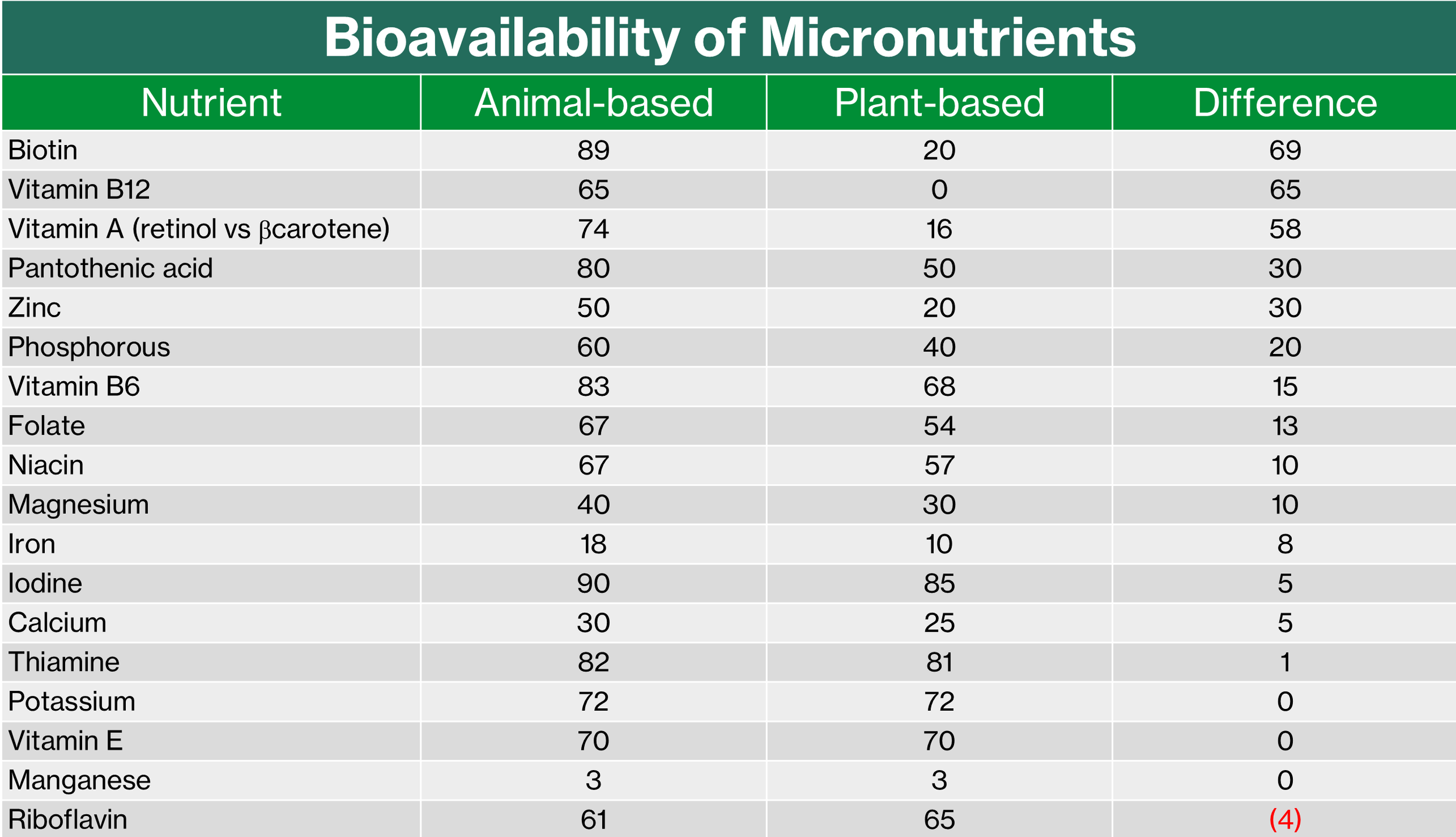
Table 1: A comparison of micronutrient bioavailability from animal- and plant-based food
This analysis reinforces a conclusion by the paper’s authors, namely:
“…bioavailability in [animal-source foods] is higher or equivalent to [plant-source foods] in all but three nutrients (riboflavin, vitamin C and vitamin K as phylloquinone)…”
I’ve highlighted riboflavin in red in Table 1, to show that its bioavailability is greater in plants than animals. However, I haven’t included vitamins C and K in my analysis because the authors of the paper (strangely) don’t provide data from animal-based foods for them. I think this omission creates the wrongful impression that neither vitamin can be sourced from animals. From my limited research into the matter, I believe that both are present in animal-based food:
Vitamin C – Vitamin C is overwhelmingly found in plant-based foods, with fruits and above-ground vegetables being the richest sources. Animal-based foods contain much lower amounts, primarily in certain organ meats (e.g., liver, kidney, and thymus). The vitamin is heat-sensitive and cooking reduces meat sources significantly
Vitamin A – The paper lists only plant-based sources (β-carotene and phylloquinone) so it should come as no surprise that animal sources have no values. This is quite odd since animal-based meats, especially liver and fish oils contain much greater amounts of bioavailable vitamin A (e.g., retinol) than plants. Vitamin A can be safely sourced from both types of food.
This issue highlights an important limitation of the paper which I address below.
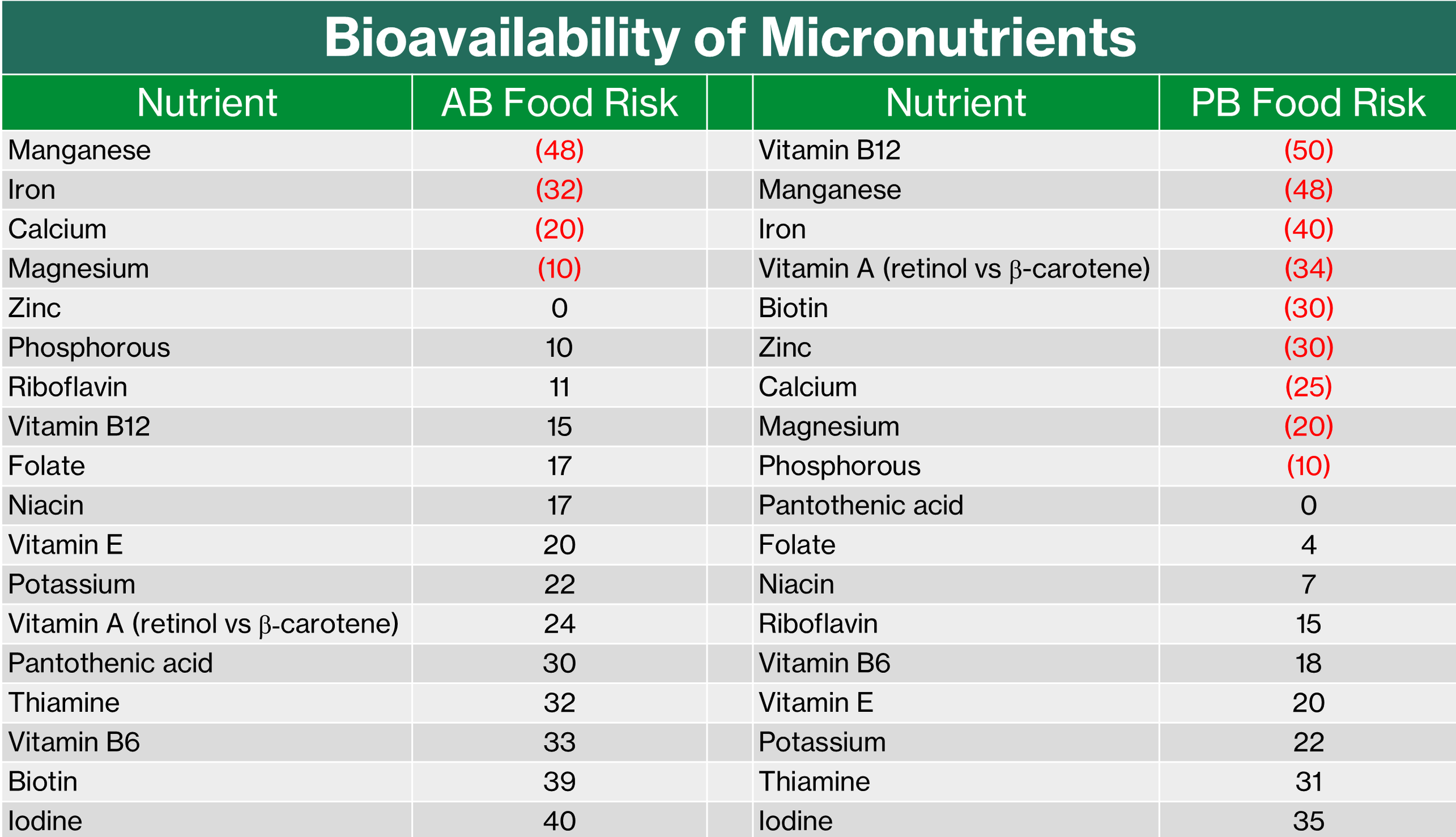
Table 2: Relative risks associated with bioavailability of micronutrients in animal- (AB) and plant-based (PB) foods (negative values bracketed and in red).
To get a sense of relative risk of low bioavailability, I subtracted the published values from 50. This is purely arbitrary but it does highlight where risk may reside. For example, there is no vitamin B12 in plant-based food and animal- and plant-based foods may not provide much manganese.
This simple analysis shows two things:
Unsurprisingly, plant-based foods may represent a greater risk than animal-based
Both types pose some risk of insufficient micronutrition
Animals – Manganese, iron, calcium and magnesium
Plants – Vitamin B12, manganese, iron, vitamin A, Biotin, zinc, calcium, magnesium, and phosphorous
Limitations of the paper
Overall, this is a valuable "first-in-class" compilation, but it should still be interpreted cautiously - real-world bioavailability depends on the full diet and context. For example:
Averages mask wide variability across specific foods, preparation methods, geography, and individuals (e.g., sex, age, gut health, lifestyle).
Incomplete data (e.g., no animal values for vitamins C and K) creates gaps
Doesn't account for food synergies (e.g., animal foods can enhance absorption of plant nutrients) or anti-nutrients in plants
Summary
This review provides useful data showing that animal-based foods generally deliver vitamins and minerals in more bioavailable forms. This aligns with evolutionary perspectives on human diets but doesn't make plant-based eating inherently unhealthy. Well-planned vegan and vegetarian diets can suffice with attention to key nutrients like vitamin B12.
Regardless of preference, everyone can benefit from focusing on nutrient-dense food in light of the worldwide drop in dietary micronutrient content and evidence that deficiencies are leading to increased hospitalization
References
Perspective: Nutrient bioavailability is the missing ingredient connecting food systems to nutrition security and environmental sustainability Nicholas, Khristopher M. et al. The American Journal of Clinical Nutrition, (2026)