Raw Drinking Milk - International Availability and Regulation
In a nutshell
Outright national bans on availability of raw drinking milk are uncommon, but they do exist
The UK, EU, Japan, and the United States have the most transparent written rules and enforcement. Elsewhere, law and enforcement often diverge
The UK, EU, and many US states employ a similar risk assessment approach - registration, herd health, microbial testing, labelling, and limited distribution channels
This is the third in a four-part series about raw milk:
The Truth About Raw Drinking Milk - Why it is Safe and Healthy
Raw drinking milk - International Availability and Regulation
The situation in Scotland
Eagle-eyed readers will notice that this article is now a combination of what was previously two, and I’ve decided to write in future about the situation in Scotland, where I live.
I’ve learned that describing what’s going on in the world of raw drinking milk is not at all straight-forward. For example, definitions of “ban,” “available,” and “legal” vary widely. I’ve tried to distinguish between countries in which legal distribution and availability differ. This is important in Canada where legal distribution is mostly not allowed but farmers can drink their own. Access around the world, therefore, is not a simple legal/illegal dichotomy, it operates on more of a spectrum.
I’ll cover the following:
Countries in which no distribution is allowed
Regional availability and regulation
Comparing European and American regulations in detail
Countries in which no distribution is allowed
Countries that ban raw drinking milk distribution (sale or otherwise) are in the minority (Table 1). Those four with legal prohibitions contain approximately 1.5 billion people, or 19% of the global population.
When we consider that the biggest do allow (or at least not prohibit) farmers to drink their own, Singapore stands alone as the only country in which no-one likely has access to raw drinking milk (Singapore is a city-state without a dairy herd).
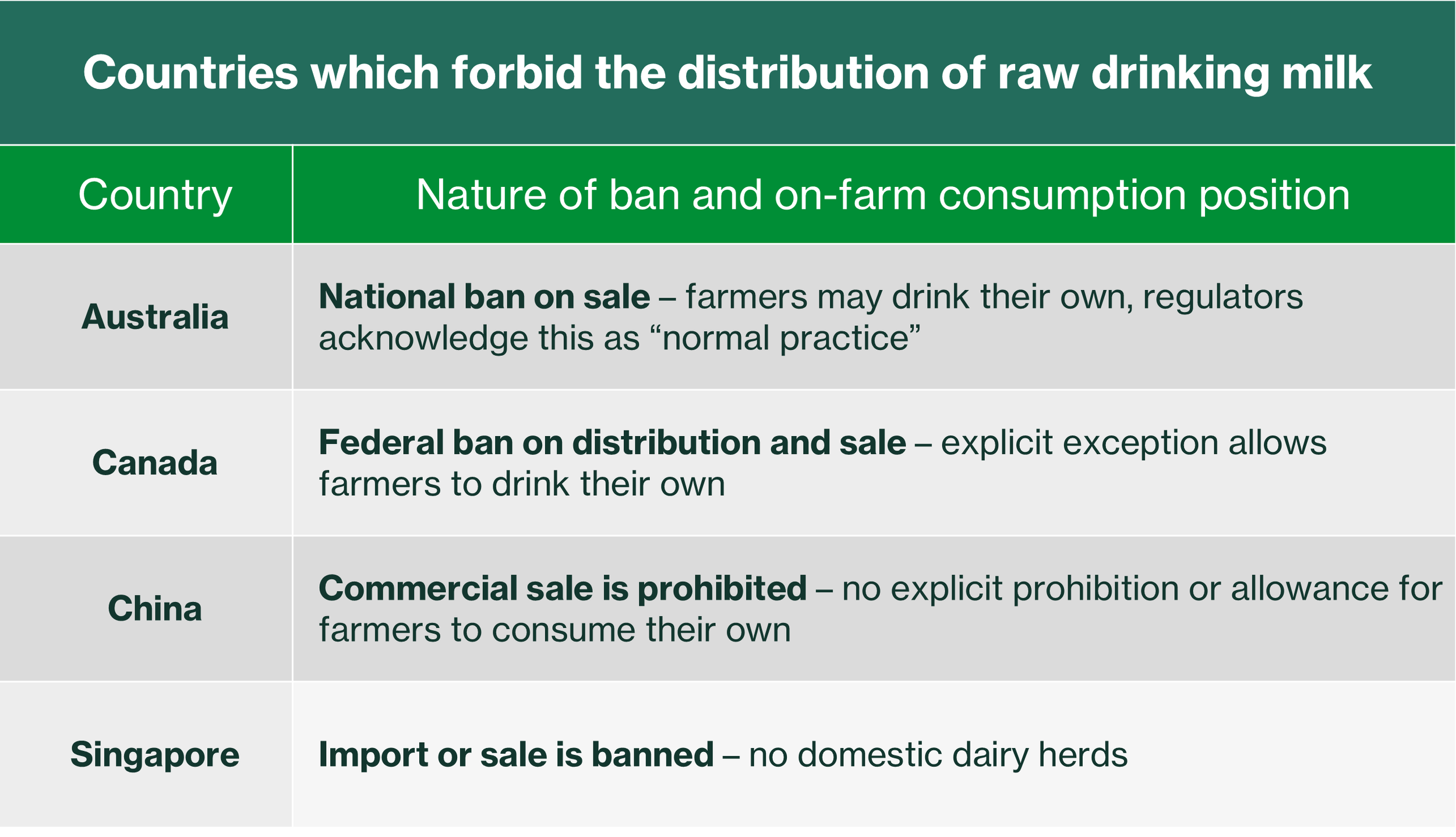
Table 1: Four countries in which raw drinking milk cannot be legally distributed
I discovered late in the process of writing that limited legal distribution of raw goat milk in Australia and of cow’s milk by herdshare in Canada may be allowed. The broader picture still stands.
Regional availability and regulation
In Europe, Japan and America raw drinking milk is available and transparently regulated. In the rest of the world, regulations do exist but they appear to be less transparent and often not enforced.
The following sections describing regional approaches and showcase data from example countries, but obviously not all from that region.
The upshot is an emergent picture that is at least directional in nature.
Europe – non-European Union
Three European countries not members of the European Union (EU) are highlighted in Table 2. The approach employed differs widely:
Norway – raw drinking milk is not technically banned but it’s close
Switzerland – allows people to take responsibility for their own actions within the context of a lightly controlled framework
United Kingdom – Provides a prescriptive approach for most of the country designed by the private farming Raw Milk Producers Association (RMPA) with oversight by State regulator Food Standards Authority (FSA). RMPA membership is estimated at around 150 producers
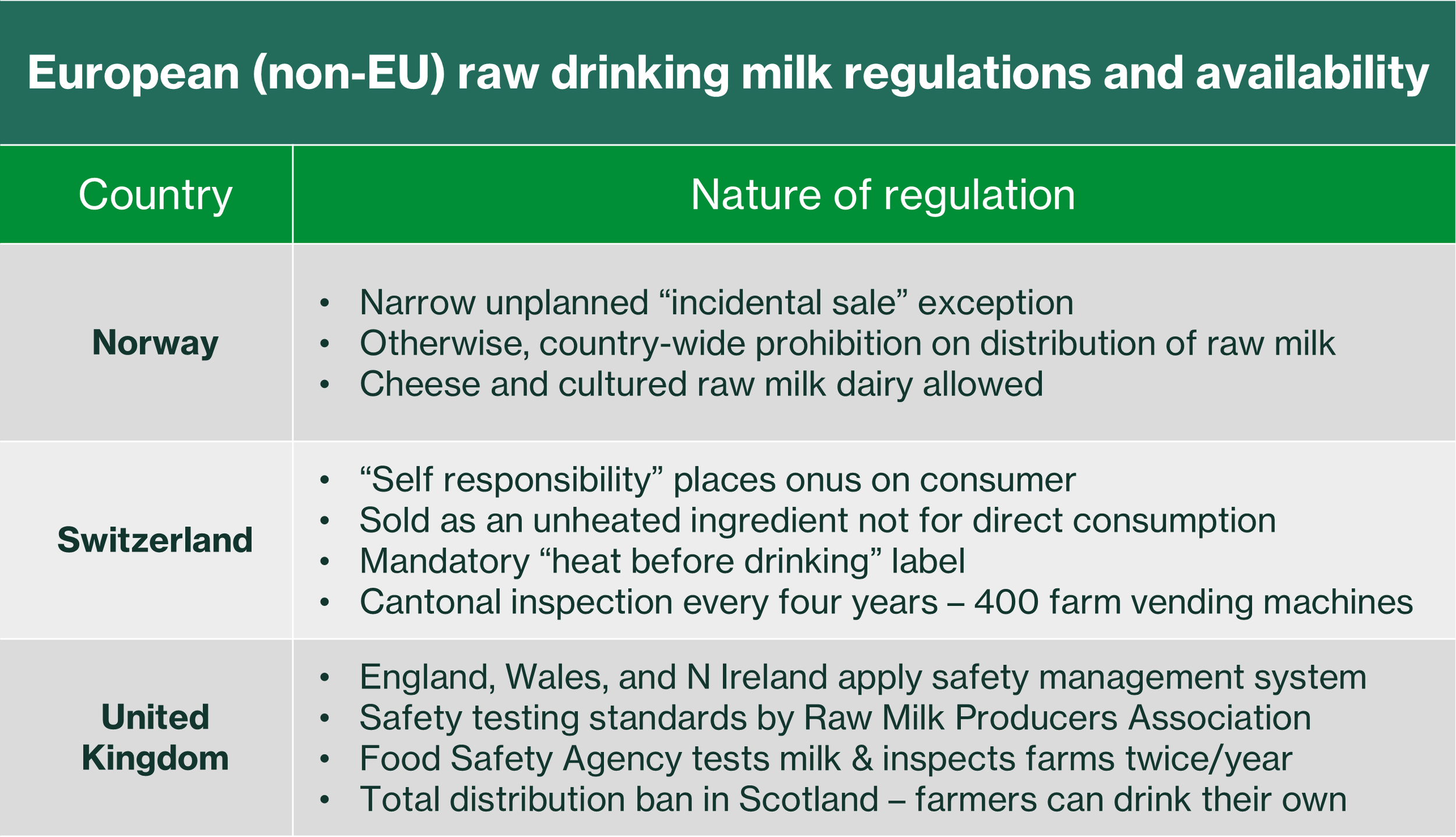
Table 2: European (non-EU) country-specific regulations and availability
Europe – EU member States
The European Union (EU) contains 27 member States and provides baseline regulations that must be at least met by those members.
Tables 3 and 4 highlight the EU baseline regulations and provide details for five members States:
EU –member States can require more extensive or stricter regulations than the baseline Directive 853/2004
Austria – a fairly light touch with additional labelling similar to that in Germany and Italy
Denmark – registered farms are not allowed to exceed maximum production volume
Germany – the most extensive and prescriptive national standards in the EU and similar to UK and America. Employs one strict and one less strict approach that applies to retail and vending machine outlets, respectively
Italy – another light touch requiring that milk be boiled before consumption
Sweden – production volume limit the same as Denmark
The EU system consists of a light-touch baseline set by the EU and State-level guideline that limit volume either explicitly (Denmark and Sweden) or implicitly by allowing only vending machine distribution (Austria, Germany, Italy). Additional “boil before consumption” labels may be required. Overall, the system as it exists in those EU countries highlighted allows people to decide for themselves how to proceed.
I am conscious that I have not explored some of the more recent eastern EU member States (Bulgaria, Croatia, Czechia, Estonia, Hungary, Latvia, Lithuania, Poland, Romania, Slovakia, Slovenia). I’ll follow up with a more extensive EU picture in a future article.
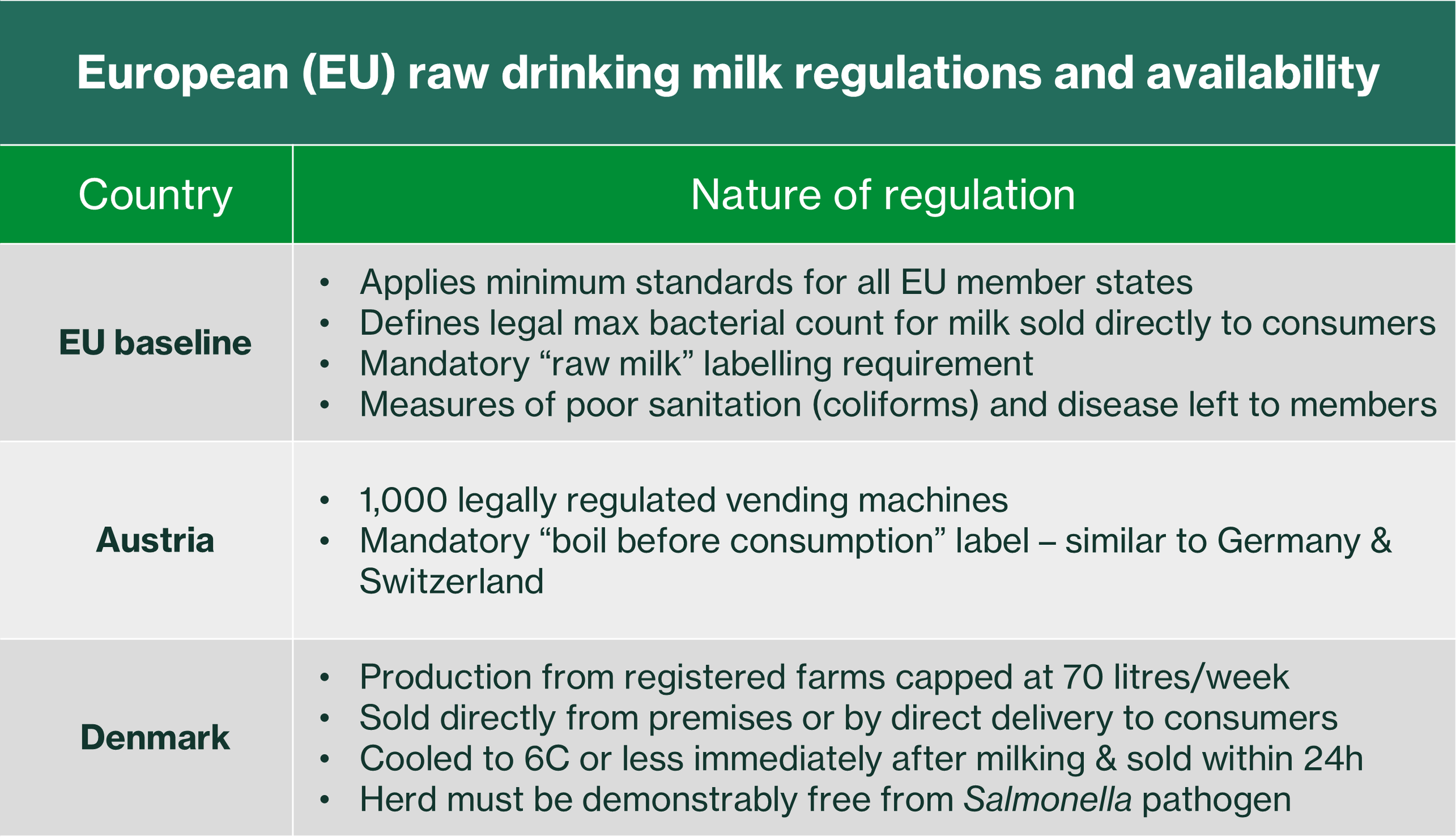
Table 3: European (EU) country-specific regulations and availability – 1 of 2
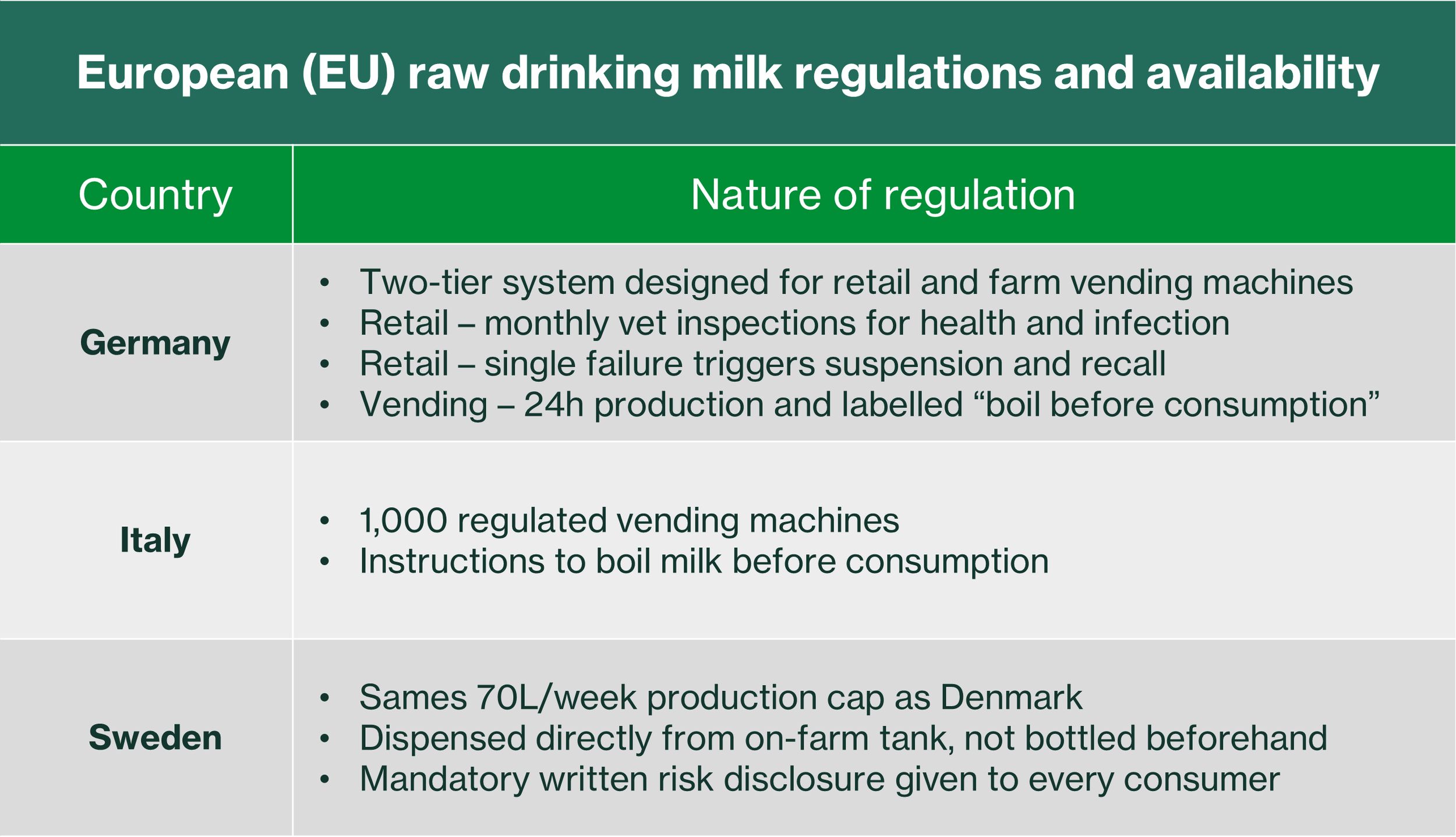
Table 4: European (EU) country-specific regulations and availability – 2 of 2
United States of America
Federal law prohibits sales between States but provides no oversight nationally. Everything within its borders is the responsibility of an individual State. This is a more individualistic approach than the EU’s baseline-plus-national-detail (which nevertheless still recognizes the rights of people to choose for themselves).
A special note before considering the State-specific approaches summarized in Table 5. Estimates of the number of States permitting distribution of raw milk range from 30 to 49. The uncertainty appears to relate to definitions of words like “prohibit”. I have made no attempt to reconcile those numbers.
State legislatures use four ways to permit distribution (Table 5). On-farm sales are the most common followed by retail, herdshare, and sales for pet consumption only. 10 States plus the District of Columbia (DC) prohibit distribution. I assume that at least some of those States allow farmers to consume their own.
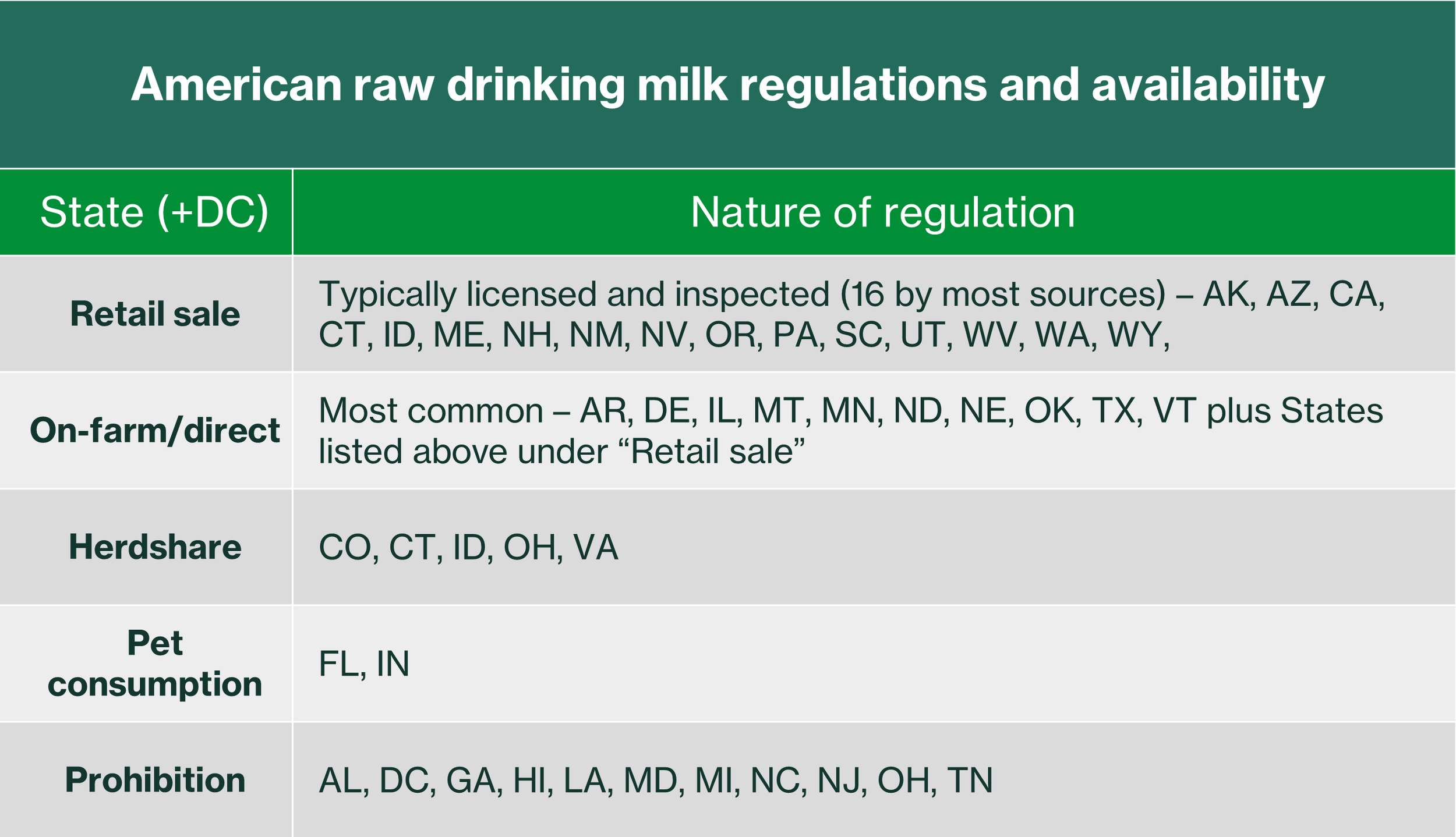
Table 5: US State-specific regulations and availability
Africa
In the countries sampled (Table 6), everyday access is often informal. Regulation, where it exists, appears to act as a signal rather than a prescriptive and enforceable rule. Even in S Africa, with the most developed African approach, there exists only a framework with apparently limited discernible detail.
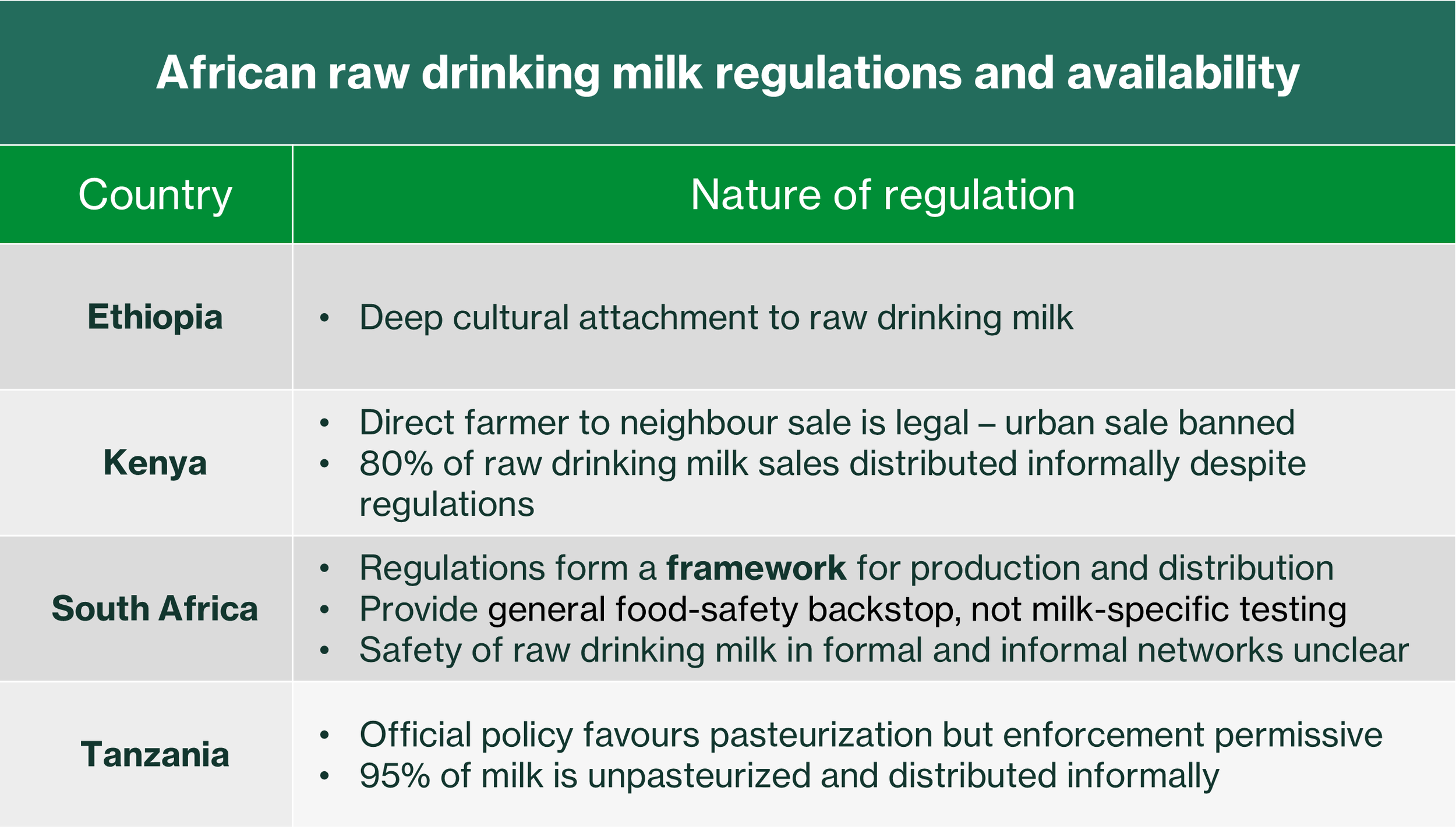
Table 6: African country-specific regulations and availability
Asia
The situation in Asia looks to be three-pronged (Table 7):
Ban-and-process (China and S Korea)
Legalise but limit to one registered farm (Japan)
Legalise but still distribute informally (India)
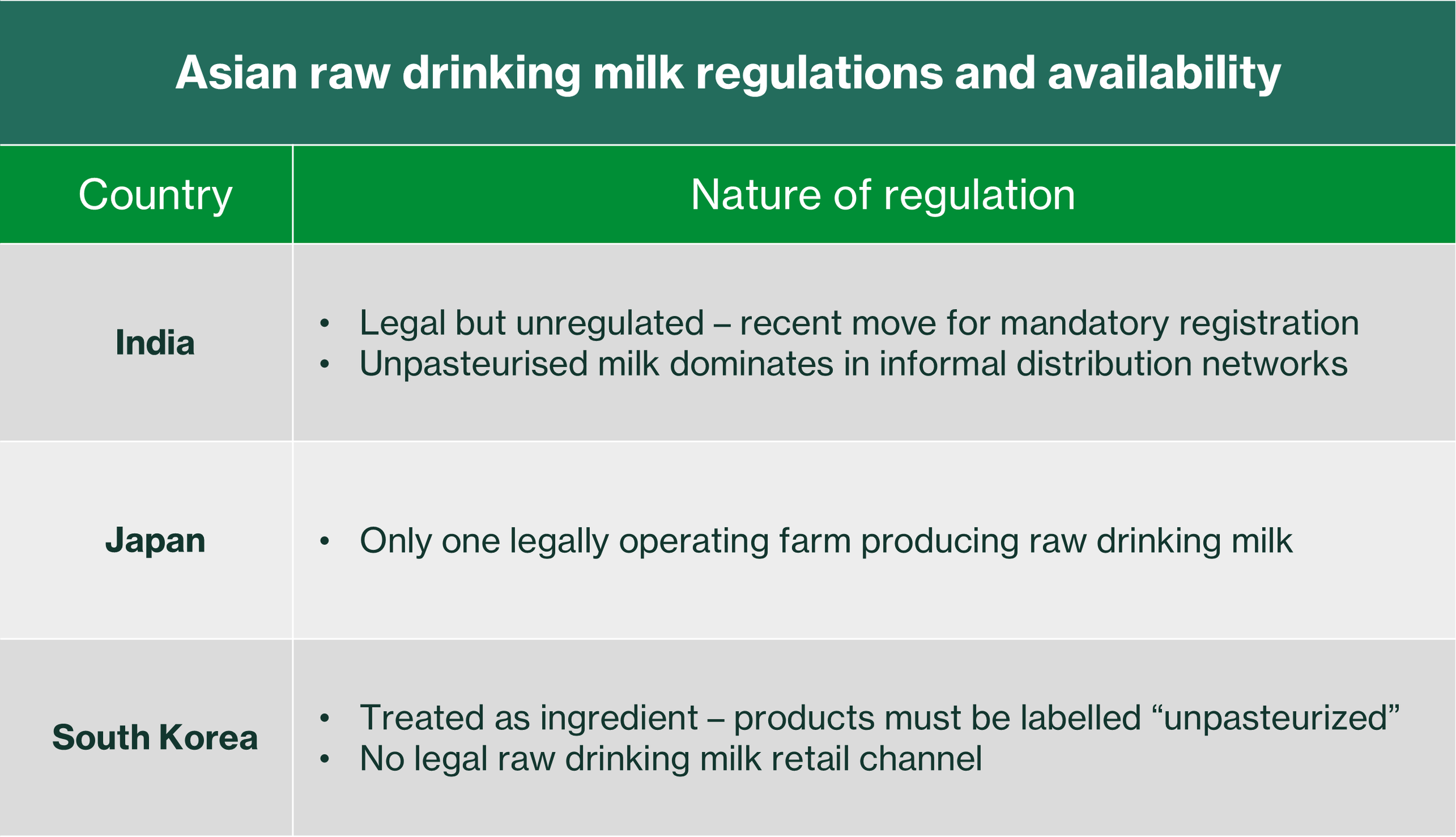
Table 7: Asian country-specific regulations and availability
Central and South America
Many laws require pasteurisation but enforcement is largely lacking, and raw drinking milk is distributed mostly through traditional informal networks (Table 8). This is similar to the situation in Africa.
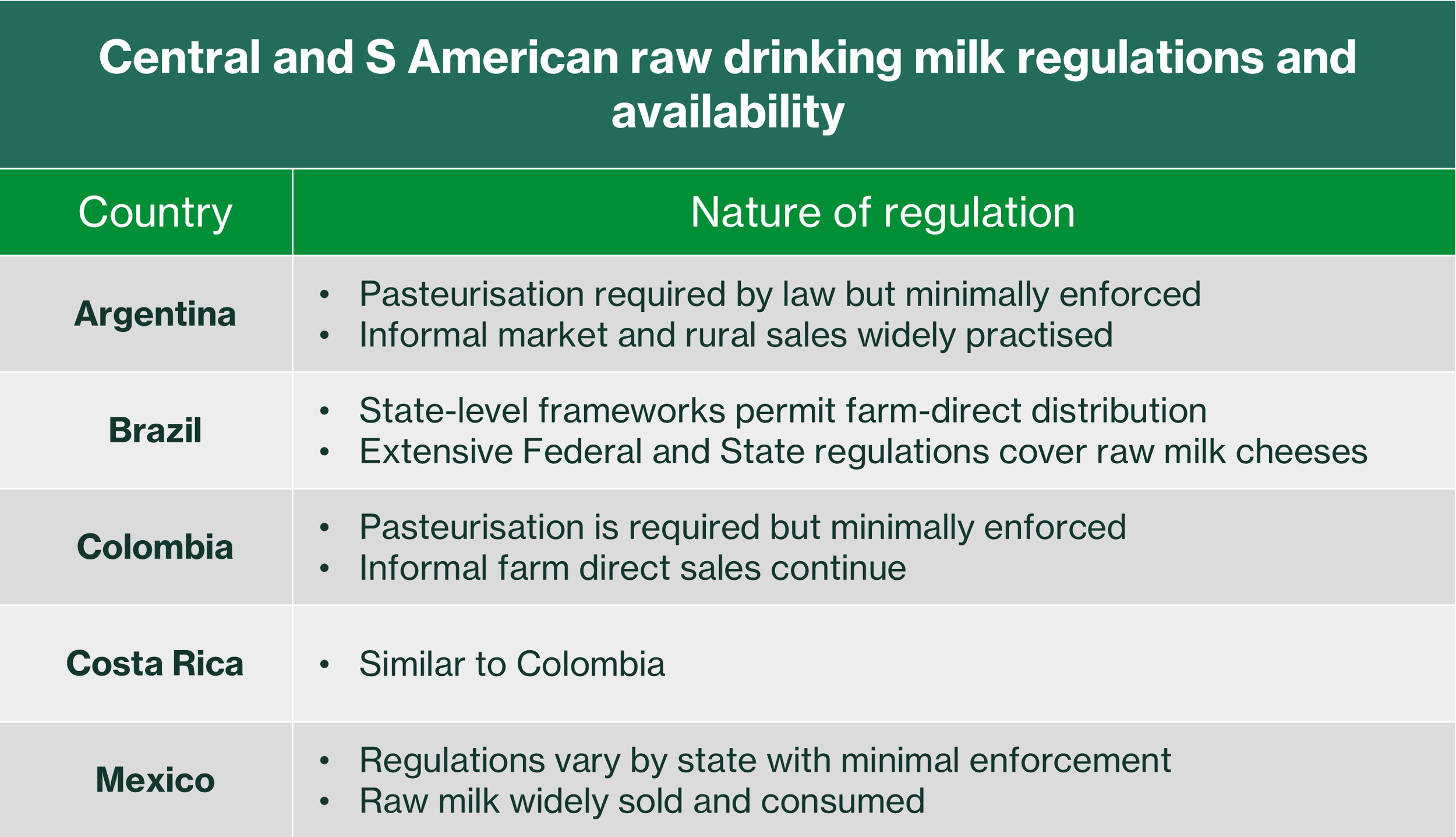
Table 8: Central and South American country-specific regulations and availability
Comparing European and American regulations in detail
Three countries and one trade bloc allow people access to raw drinking milk within the context of a transparent, prescriptive and enforceable legal system. These are the UK, EU, Japan, and America. Japan allows distribution from only one registered farm so I’ve concentrated on the other three. The components within the three are broadly similar and summarized in Table 9.
I find it interesting that all three regions have adopted approaches that address the same big picture issues. This gives me confidence that an overlapping framework exists to provide people with access to raw drinking milk in the context of a robust legal, safe production and distribution system.
Consider:
Regulations exist – tacit recognition that people desire access
Microbial testing – Raw milk is a living food. Tests are used to distinguish healthy raw-milk flora from contaminants introduced by sick animals or poor production. A fail at any level should trigger an investigation and potential corrective action
Bacteria – we expect to find bacteria in a healthy microbiome product. If the total count is higher than acceptable (e.g., <20,000 in the UK) perhaps the milk wasn’t cooled immediately or has been stored for too long
Coliform – these are specific types of bacteria that typically come from feces
Pathogens – these are bacteria known to cause disease and must never be in food, whether that is raw milk, meats or vegetables
Herd health – perhaps the most important – acknowledging an animal welfare obligation plus the fact that herd health underpins milk qualitySummary
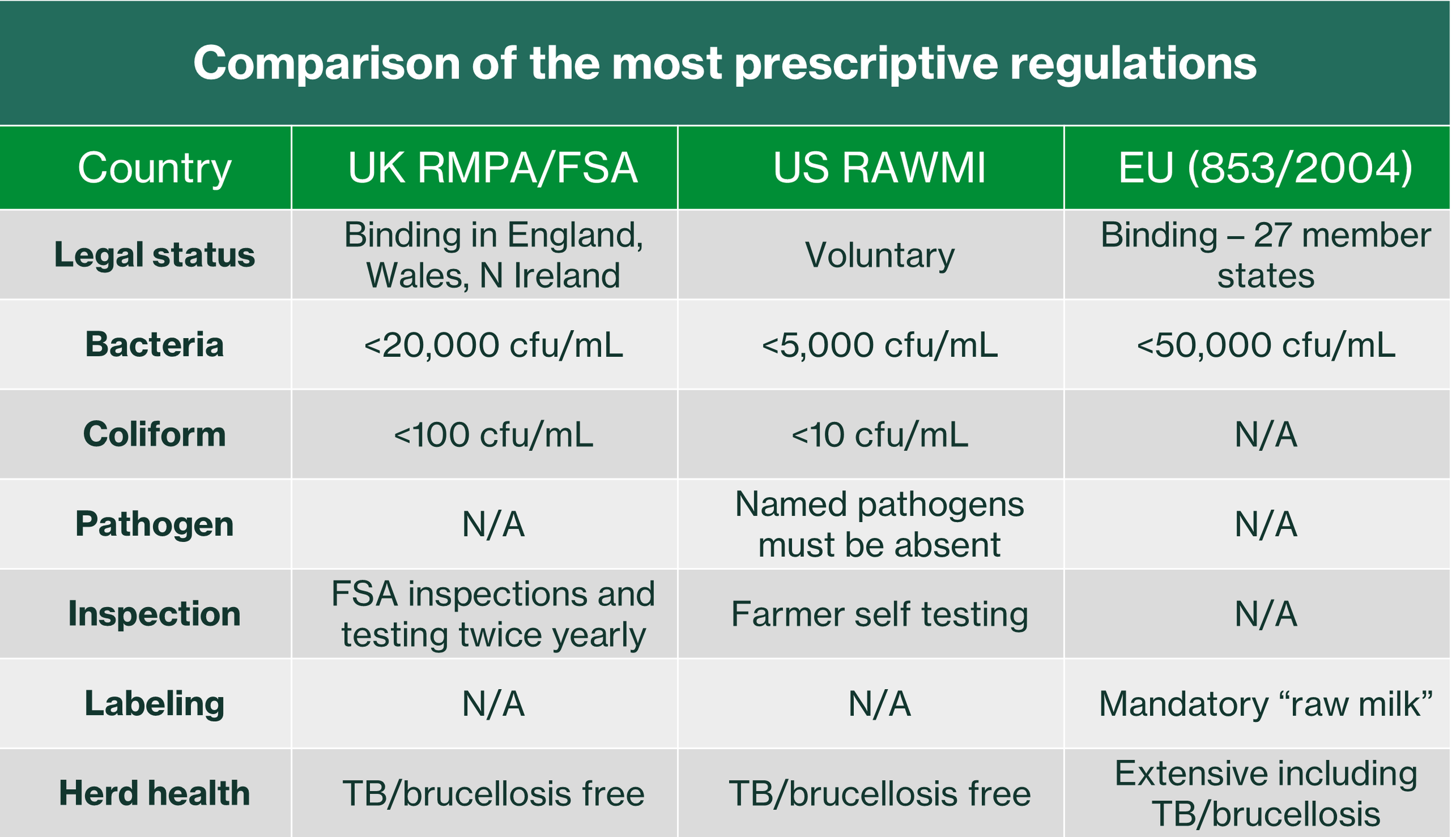
Table 9: Side-by-side comparison of the three most prescriptive and enforced regulatory programs governing the distribution of raw drinking milk
A note about sources of information for this article
I used AI tools Claude and Grok to conduct research for this article. I didn’t follow up extensively on the source material used but I did stress test the content of what I received. I think this method is adequate to product an accurate map of the landscape. Beyond the directional map, more work is needed to verify up-to-date individual statutes.
My method:
Research for the original draft used Claude and GROK - ask both models the same questions
Iterate with Claude and create a draft
Check my draft of Claude’s summary with GROK
Incorporate GROK answers into an edit of the article
Ask Claude whether the edited article matched its research report
Edit finally if required and publish
I previously conducted a review of six popular AI tools if you’re interested in learning more.
Summary
People in most countries can drink raw milk if they want to. That is not the same as saying everyone there has legal access. Norway, for example, is very restricted. The UK and the United States contain sharp internal regional differences. Singapore is an unusually clear case of no practical access: sale is prohibited and there is no domestic dairy herd.
The UK (outside Scotland), many EU member countries, and many US States regulate it in the same broad way they regulate other perishable foods such as meat and fresh produce (see Table 9). They set production, testing, distribution, and labelling rules rather than treating raw milk as an unusually risky category. I take that as tacit recognition of demand for minimally processed food - and of the fact that no natural food is perfectly safe or unsafe. Those are my assumptions, not statements of official policy.
Where those systems exist, people who want raw milk can obtain it through a legal channel and then decide for themselves whether it belongs in their individual diet. In my opinion, legal distribution is likely to keep widening in places that already have a workable framework, as more consumers take food choices into their own hands.
This article maps the difference between availability and legal distribution. It is a directional guide, not a comprehensive statute-by-statute survey.